
Reminder Agent: How It Works
What is the Reminder Agent?
The Reminder Agent is an automated feature that helps you follow up with customers who haven’t responded to support tickets. Instead of manually tracking and sending follow-up messages, the Reminder Agent does this for you automatically.How Does It Get Activated?
The Reminder Agent wakes up and starts working whenever a ticket’s status changes. Here’s the step-by-step process:1. Status Change Triggers the Check
When you (or anyone on your team) changes a ticket’s status, the system asks: “Should the Reminder Agent handle this ticket?“2. Eligibility Check
The system checks if the ticket meets ALL of these conditions:
If any of these checks fail, the Reminder Agent stays quiet and does nothing.
3. Scheduling the Reminder
If the ticket passes all checks, the Reminder Agent calculates when to send the first reminder message.Two Ways to Schedule Reminders
You can choose one of two scheduling methods. Each method handles timezones and messenger working hours differently.Option A: Daily Reminders
Send reminders at the same time every day — perfect for consistent, predictable follow-ups.How Daily Scheduling Works
- When a ticket becomes eligible, the system looks for the next occurrence of your reminder time
- If that time has already passed today, it schedules for tomorrow
- If “Weekdays only” is selected, weekends are automatically skipped
Timezone Behavior
Daily reminders use your company’s configured timezone:- If your company is set to “America/New_York” and you set reminders for 9:00 AM
- The reminder fires at 9:00 AM Eastern Time, regardless of where the customer is located
Option B: Custom Delay
Send reminders after a specific number of hours — perfect for urgent follow-ups or SLA-based timing.How Custom Delay Works
- When a ticket becomes eligible, the system takes the current time
- Adds your configured number of hours
- That’s when the reminder fires
Timezone Behavior
Custom delay is timezone-agnostic — it simply adds hours to the current moment:- If it’s 2:00 PM anywhere and you have a 4-hour delay
- The reminder fires at 6:00 PM (in UTC internally, displayed in local time)
Integration with Messenger Working Hours
When the Working Hours feature is enabled, the Reminder Agent respects your business schedule. This prevents reminders from being sent when your team isn’t available.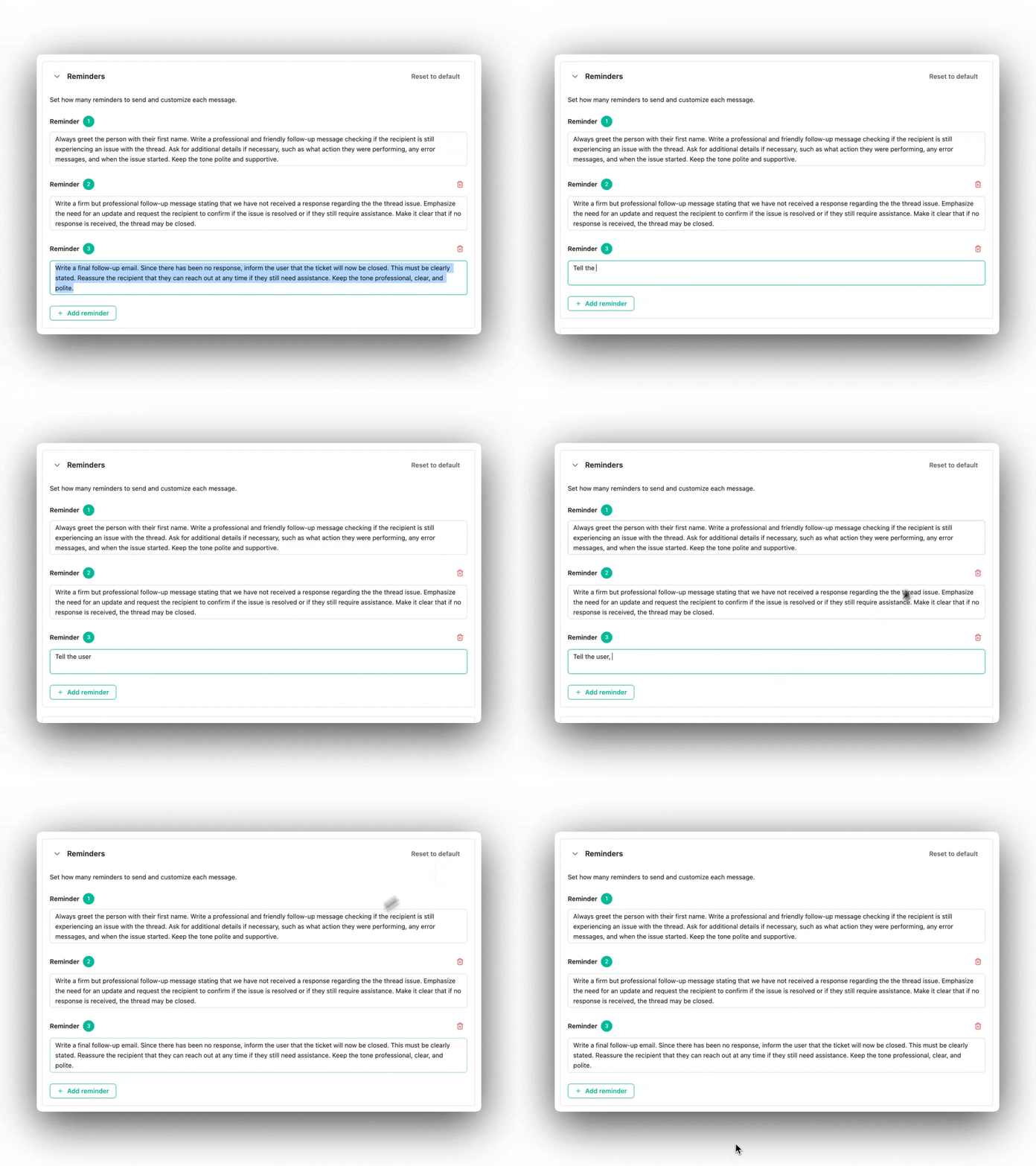
How Working Hours Are Determined
Important: Working hours use the Messenger Hours timezone, which may be different from your company timezone!
Working Hours + Daily Reminders
The system validates that your reminder time falls within working hours:Valid Configuration
- Working Hours: 8:00 AM - 6:00 PM
- Reminder Time: 9:00 AM
- 9:00 AM is within working hours — reminder will fire
Invalid Configuration
- Working Hours: 9:00 AM - 5:00 PM
- Reminder Time: 8:00 AM
- 8:00 AM is BEFORE working hours start
- Result: Error message, reminder skipped
Working Hours + Custom Delay
The system adjusts the calculated time to fit within working hours:Edge Cases & Limits
Quick Comparison
What Happens When a Reminder Fires?
When the scheduled time arrives:- Final eligibility check - The system confirms the ticket is still eligible (customer hasn’t replied, status hasn’t changed, etc.)
- Message sent - An AI-generated follow-up message is sent to the customer based on the instructions you’ve configured
- Next reminder scheduled - If you have multiple reminders configured (up to 5), the next one gets scheduled
- Activity logged - An internal note is added to the ticket showing “Reminder Agent sent Reminder 1” (or 2, 3, etc.)
Multiple Reminders in Sequence
You can set up to 5 reminder messages, each with its own custom instructions. They fire one after another:What Happens After the Last Reminder?
After all your configured reminders have been sent (and the customer still hasn’t replied), the Reminder Agent can automatically:- Change the ticket status to a status you’ve designated (e.g., “Waiting for Response”)
- Close the ticket if you’ve set the final status to a “closed” status
Summary Flow
Configuration Checklist
To use the Reminder Agent, make sure you have configured:- Enabled the Reminder Agent for your company
- Selected customers (all or specific ones)
- Selected boards where reminders should apply
- Selected sources (email, chat, etc.)
- Mapped statuses - which statuses trigger reminders and what status to apply at the end
- Set timing - daily time OR custom delay hours
- Written reminder instructions - what the AI should say in each reminder message (up to 5)
- Configured working hours if you want time-aware scheduling
FAQ
What if a customer replies after the first reminder?
What if a customer replies after the first reminder?
The next reminder is automatically cancelled. The ticket returns to normal handling.
Can I see which tickets have active reminders?
Can I see which tickets have active reminders?
Yes, the system logs “Reminder Agent is activated” as an internal note when reminders are scheduled.
What timezone does the Reminder Agent use?
What timezone does the Reminder Agent use?
It uses your company’s configured timezone for daily reminders, and your messenger’s working hours timezone for working-hours adjustments.
What if no working hours are configured?
What if no working hours are configured?
If working hours feature is enabled but no hours are set up, you’ll receive an error message and the reminder will be skipped.